Kontaktirajte nas
Vaša email adresa neće biti objavljena. Obavezna polja su označena *

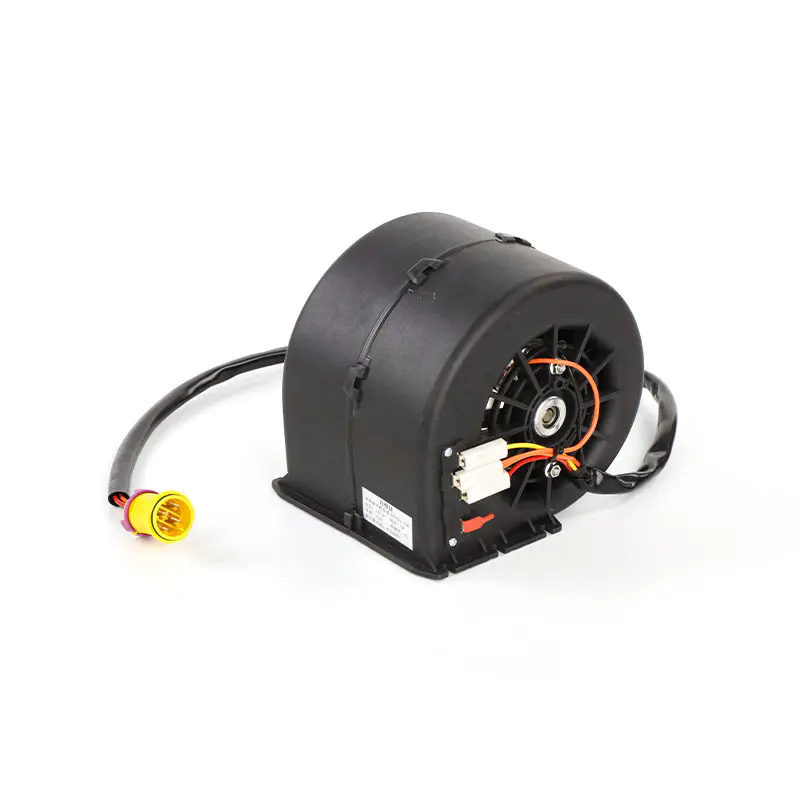
In the design of vehicle evaporator blowers, noise control technology has always been one of the focuses of research and development. As consumers' requirements for car ride comfort increase, the control of vehicle interior noise has become more and more important.
1. Active noise control technology
Active noise control technology is the widely used technology in the design of vehicle evaporator blowers in recent years. Its principle is to detect the noise generated by vehicle evaporator blowers through sensors, and generate a sound wave with the opposite phase and the same amplitude as the noise in real time, so that the two cancel each other out in physical space, thereby achieving the purpose of reducing noise. This technology is particularly effective for low-frequency noise, because low-frequency noise has a longer wavelength and is easier to eliminate through sound wave interference.
In the design of vehicle evaporator blowers, active noise control technology is usually implemented in combination with digital signal processing technology (DSP). Through the DSP chip, the noise signal collected by the sensor can be processed in real time, and the corresponding anti-phase sound wave can be quickly generated. In addition, with the continuous development of intelligent control technology, active noise control technology can also be integrated with other systems of the vehicle (such as navigation system, in-vehicle entertainment system, etc.) to achieve more intelligent noise control.
2. Passive noise control technology
Although active noise control technology has significant effects, passive noise control technology still plays an important role in certain frequency ranges. Passive noise control technology mainly reduces the propagation of noise by adopting sound-absorbing materials, sound insulation structures, etc.
In the design of vehicle evaporator blowers, the application of passive noise control technology is mainly reflected in the following aspects:
Optimization design of vehicle Evaporator Blowers shell: By optimizing the structure of the blower shell, its sound insulation performance is increased and the propagation of noise to the outside is reduced.
Application of sound-absorbing materials: Use sound-absorbing materials such as porous foam plastics, glass fiber, etc. inside or around the blower to absorb noise and reduce its intensity.
Design of soundproof cover: Set a soundproof cover outside the blower to reduce the impact of noise on passengers by isolating the propagation path between the noise source and the receiver.
3. Application of new materials and technologies
In addition to the two main noise control technologies mentioned above, some new materials and technologies have also been applied in the design of vehicle evaporator blowers. Using new materials such as carbon fiber composite materials and nanomaterials to manufacture the blower housing can improve its strength and sound insulation performance; using advanced aerodynamic design to optimize the airflow distribution of the blower can reduce the noise it generates; using intelligent sensing and control systems to monitor and adjust the operating status of the blower in real time to achieve more refined noise control.
Noise control technology plays an important role in the design of vehicle evaporator blowers. By combining active noise control technology and passive noise control technology, as well as applying new materials and technologies, the noise generated by the vehicle evaporator blower can be effectively reduced and the riding comfort of passengers can be improved.
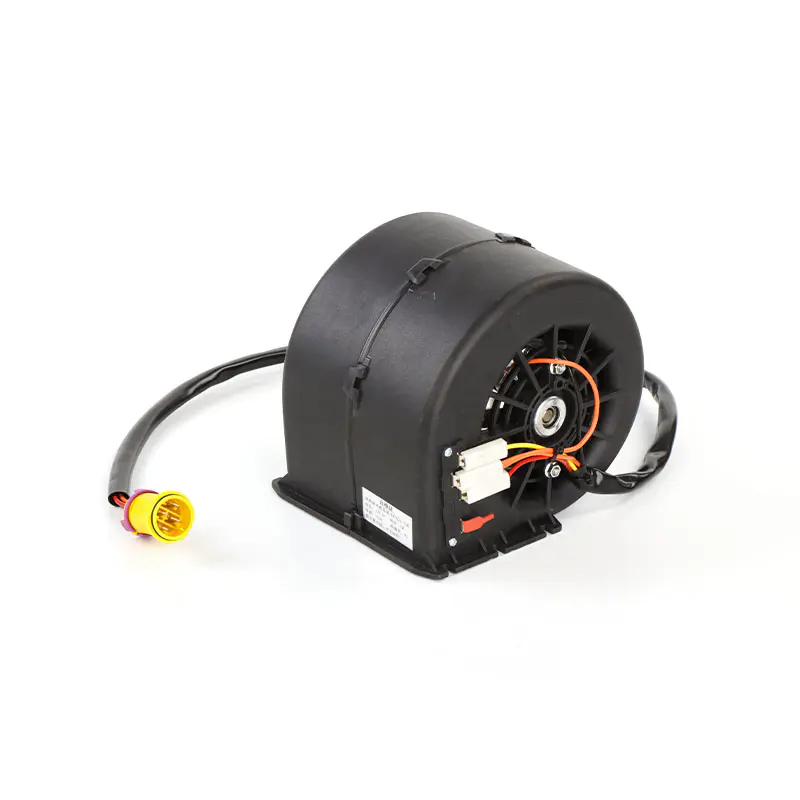
Vaša email adresa neće biti objavljena. Obavezna polja su označena *
Zhejiang Nicety Electric Machinery Co., Ltd. specijalizirana je za proizvodnju četiri serije proizvoda: elektronički ventilator kondenzatora, ventilator hladnjaka (spremnika za vodu), puhalo i sklop klima uređaja. Profesionalna proizvodnja američkih, europskih, japanskih, korejskih i domaćih marki DC aksijalni ventilatori za automobile.
Email: [email protected] / [email protected]
Tel: +86-0578-7125439 / +86 181 0658 9231
Address:No. 98, Guangda Street, Jinsha Industrial Zone, Longquan City, Zhejiang Province, Kina